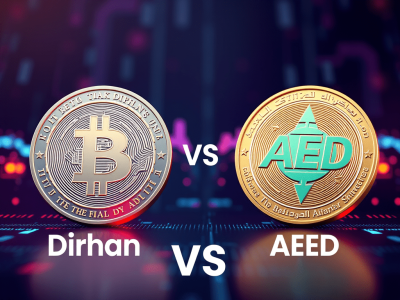
Digital Dirham (CBDC) vs AED Stablecoins: A Breakthrough 2025. Dubai is moving from crypto experiments to on-chain money infrastructure.
This blog is a guide to features, wallets, regulations, and real-world payments so you can build with on-chain AED.
Table of Contents
What is Digital Dirham?
It is a new form of CBUAE money. It is a legal tender. It is non-interest-bearing. It is fully interchangeable at par with cash and deposits.
The design targets retail (rCBDC) and is delivered through a two-tier model (licensed intermediaries offer wallets; CNUAE remains the issuer). Privacy is handled via Pseudonymity + KYC, and no PII is on Ledger.
The United Arab Emirates speaks in the present. The legal framework already recognizes a digital currency as legal tender. A bespoke issuance platform has been built. A real-value retail pilot has run. A live cross-border payment went through on mBridge in early 2024.
Read More Crypto in the Middle East – 5 Key Insights.
What is the Status and Roll-out?
In July 2025, CBUAE released a public report summarizing achievements, pilots (incl. real-value retail), and next steps towards launch. As part of the national FIT programme (launched in 2023).
For Cross-border rail that is for international settlement, the UAE is a core participant in the BIS Project mBridge. The project has reached an MVP stage. It enables instant cross-border CBDC payments among participating central banks.

What AED Stablecoins are (bank/private-issued)?
AED Stablecoins are fiat-referenced tokens pegged 1:1 to the Dhiram. They are redeemable against reserves held by the issuer or custodian, not by central bank money.
ADQ+IHC+First Abu Dhabi Bank (FAB) announced a Dhiram-backed Stablecoins, under CBUAE oversight, with FAB as issuer (pending approval). The project references the ADI blockchain as the distribution network.
Tether (planned) announced a Dhiram-pegged Stablecoins backed by UAE-based reserves; timing dependent on approvals.
Regulatory Backdrop – In Dubai (non-DIFC), VARA’s “Fiat-Referenced Virtual Assets (FRVA) Issuance Rules” set requirements for reserves. They also set requirements for redemption, audits, disclosures, and capital.
Inside DIFC, the DFSA offers a Tokenisation Regulatory Sandbox. It focuses on investment tokens. Crypto and fiat tokens are out of scope. Yet, it provides helpful context for tokenized finance.
Digital Dhiram vs AED Stablecoins
| Dimension | Digital Dhiram (CBDC) | AED Stablecoins |
| Issuer & Liability | CBUAE (sovereign money; legal tender) | Private/bank issuer; claim on issuer’s reserves |
| Legal Status | Legal tender, par with cash/deposits. | Not legal tender; redemption terms govern utility. |
| Distribution | Two-tier (banks/PSUs provide wallets) | Exchanges, wallets, banks per license/sandbox |
| Use Cases Policy/Controls | Everyday payments, settlement, remittances, Programmability.., offile Monetary policy-aligned; non-interest-bearing to avoid disintermediation. | Trading, payments, DeFi/treasury, cross-border merchant flows Reserve, audit, disclosure, market conduct under VARA/CBUAE/DFSA |
How Digital Dhiram and AED Stablecoins will Co-exist in Dubai?
Retail Payments – You can expect it for universal “cash-like” digital pay. This includes P2P, in-store, and government payments. Additionally, expect Stablecoins where wallet/app ecosystems want programmable balances. These balances will interoperate with exchanges and DeFi.
Cross-border and Trade – mBridge will streamline bank-to-bank settlement; AED Stablecoins can complement merchant/marketplace flows and 24/7 crypto- native rails.
Tokenized Finance – Both instruments can be used as DIFC/DFSA nurture Tokenisation. They serve as settlement legs for tokenized assets and RWA platforms.
Read More CBDC-How It Differs From Cryptocurrency?
A New AED Symbol?
In March 2025, CBUAE unveiled a new Dhiram symbol (physical + digital) as part of a broader modernization push. The symbol is useful for standardizing pricing and UI across apps and wallets.
Cross-border from Proofs to Production
The UAE is a core participant in BIS Project mBridge. The project reached MVP in mid-2024. It enables instant cross-border settlement among participating central banks and banks on a shared DLT platform.
This is the most credible path for CBDC-TO-CBDC trade flows, complementing correspondent banking and emerging private networks.
Real-world Use cases
- Merchant payments & checkout – You can offer it at checkout when live. Keep a compliant AED Stablecoins option for crypto-native users. This is also applicable for international wallets. Implement smart contract escrow for higher-ticket purchases (furniture, electronics), with automated release after delivery confirmation.
- Subscriptions & Salaries – Use programmable allowances (daily/monthly spend limits), just-in-time funding, and time-locked payouts for creators/contractors.
- Government & Utilities – Expect eGov fees and public services to support CBDC rails over time. Design flows to read standardized payment requests or QRs.
- Tokenized Assets (RWA) – Treat CBDC/Stablecoins as the cash leg for tokenized real estate and securities. Improved settlement speed and fewer failed traders. (DIFC’s DFSA Tokenisation Regulatory Sandbox can be a path for investment – token pilots).
Conclusio
The type of dirham will serve as a sovereign, cash-like rails for everyday payments and public services. AED Stablecoins will power programmable commerce, DeFi liquidity, and 24/7 treasury flows.
They are not competitors so much as complementary layers. One guarantees legal-tender finality, the other unlocks innovation across Web3.
The future of payments in Dubai won’t be either/or. It will combine Digital Dhiram and AED Stablecoins. They will work together to make money truly internet-native.
Read More RWA Tokenization- Why It is Redefining Massive Asset Ownership in 2025?
FAQs
Is the Digital Dhiram Live?
CBUAE has published a comprehensive report and completed retail and cross-border pilots, indicating a near-term phased roll-out. (features include offline, smart contracts, dedicated wallet)
Are AED Stablecoins Live?
ADQ/IHC/FAB announced and subject to CBUAE approval; ADI chain testnet has launched as the underlying infra. Tether (AED) announced in 2024; awaiting approval.
What about the new AED Symbol?
In March 2025, CBUAE unveiled a new Dhiram symbol (physical+digital) as part of the broader modernization push, which can be useful for standardizing pricing and UI across apps and wallets.
Can Non-UAE residents hold the Digital Dhiram or AED Stablecoins?
Likely yes via licensed intermediaries, subject to full KYC/AML. Exact eligibility and product types will depend on the roll-out policy. For now, AED Stablecoins are generally accessible to verified users of regulated exchanges/ wallets that support them.
Which network will they run on, and what about gas fees?
The Digital Dirham is expected to operate on a permissioned rail(not a public L1) with fees and limits set by policy. Integration will happen through bank/PSP APIs and SDKs, and not by deploying your own smart contracts. AED Stablecoins may live on multiple chains.