Tokenization Stack: Who Controls What in Tokenized Markets in the UAE? (2026) – Introduction – Tokenization Is Not One Thing
Tokenization is often discussed as if it were a single technology.
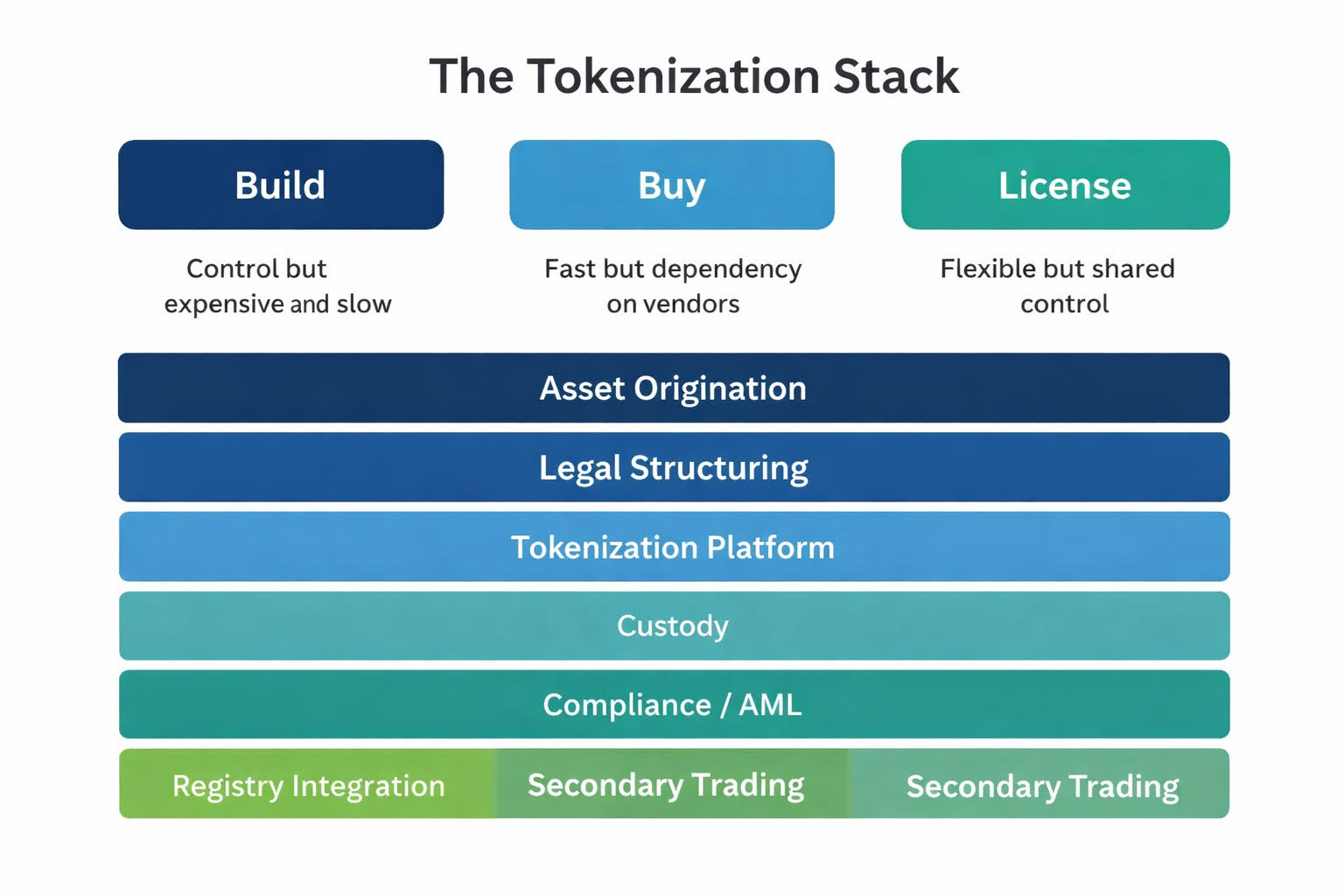
In reality, tokenization is a stack of multiple layers, each performing a different function within the financial system.
Understanding this stack is important because control, regulation, and revenue are distributed across these layers.

| Layer | Explanation |
| Asset Origination | Where assets come from |
| Legal Structuring | SPV / fund/wrapper |
| Tokenization Platform | Issues tokens |
| Custody | Holds assets/tokens |
| Compliance | AML/KYC |
| Registry | Ownership records |
| Settlement | Movement of money |
| Secondary Trading | Liquidity |
Tokenization Stack – Control vs Revenue
One of the most important strategic questions in tokenization is not technology; it is control.
Whoever controls custody, registry, and settlement often controls the market structure, even if another company provides the tokenization technology.
The UAE’s regulatory architecture is particularly relevant to the tokenization stack. Different parts of the stack may fall under different regulators. This depends on the activity performed.
For example:
- Custody falls under VASP regulation.
- Tokenized securities may fall under financial services regulation
- Payment and settlement may involve central bank regulation.
This means tokenization projects must consider not only technology architecture but also regulatory architecture.
Regulation Follows Control – Tokenization Stack
In tokenized markets, regulation often follows control rather than technology.
A company is described as a technology provider. However, if it controls client assets, it falls within a regulated activity category.
The same applies if it operates a trading platform, manages settlement, or performs brokerage functions.
This is why custody, brokerage, exchange operation, asset management, and settlement functions are typically regulated activities.
This occurs regardless of whether the system uses blockchain technology or traditional infrastructure.
In many cases, the regulatory perimeter is triggered not by token issuance itself. Instead, it is triggered by the services performed around the token.
These services include safeguarding assets, facilitating trades, managing investments, or handling client money.
As a result, it’s important to understand who controls each layer of the tokenization stack. This knowledge is crucial not only for business strategy but also for regulatory classification.
Where Value Accrues in the Tokenization Stack
Tokenization is often associated with token issuance and blockchain platforms. However, value in financial markets is captured at infrastructure layers. It is not confined to the technology layer alone.
In traditional financial markets, some of the most valuable institutions are not necessarily exchanges.
Instead, custodians, clearing houses, and settlement systems hold significant value. They control critical infrastructure.
A similar pattern emerges in tokenized markets. Custody providers, settlement providers, and regulated trading venues play a central role in the market structure.
This suggests that the tokenization opportunity extends beyond token issuance. It also lies in building and operating the infrastructure layers that support tokenized markets.
Tokenization Stack – What It Means in the UAE
The UAE’s multi-layered regulatory architecture is particularly relevant to tokenization. This is because different parts of the tokenization stack may fall under different regulatory frameworks.
For example:
- Custody activities may fall under virtual asset service provider regulation.
- Tokenized securities fall under financial services regulation.
- Payment and settlement functions may involve central bank oversight.
- Secondary trading platforms require exchange or broker-dealer licensing.
This means that designing a tokenization model in the UAE involves both technology architecture and regulatory architecture.
Founders and institutions entering the UAE market must consider several factors. They need to think not only about how to tokenize an asset. Each layer of the stack will need to be structured, controlled, and regulated.
Strategic Conclusion-Tokenization Stack
Tokenization is often described as the digital representation of assets.
In practice, tokenization restructures financial market infrastructure across multiple layers. These layers include legal structuring, custody, settlement, registry, and secondary markets.
The key strategic question in tokenization is therefore not only how tokens are created. It is also about who controls the infrastructure that supports those tokens.
The institutions controlling custody, settlement, registry, and trading infrastructure will play a central role. They will shape the structure of tokenized financial markets.
FAQs – Tokenization Stack
What is tokenization in simple terms?
Tokenization is the process of representing ownership or economic rights to a real-world asset ( such as real estate, funds, bonds, or commodities) as digital tokens on a blockchain.These tokens can represent either legal ownership or economic exposure, depending on the structure.
Does tokenization mean investors legally own the asset?
Not always. In many tokenization structures today, tokens represent economic rights ( cash flows, profit share, or exposure), while legal ownership is held through a legal structure such as an SPV, fund, or trust. True legal ownership tokenization requires integration with legal registries and regulatory approval.
What are the main benefits of Tokenization?
Tokenization can potentially improve : a) Liquidity (easier secondary trading) b) Fractional ownership c) Settlement period d) Access to global investors e) Transparency of ownership records. However, these benefits depend heavily on regulatory approval and secondary market infrastructure.
Why is Regulation important in tokenization?
Tokenized assets often fall under securities laws, custody rules, and settlement regulations. Without regulatory clarity, tokens may not represent legally enforceable ownership or may not be tradable on regulated secondary markets.
What infrastructure is required for tokenized markets to work?
Tokenization is not just about creating tokens. A functioning tokenized market requires:
Legal structuring
Custody
Token issuance platform
Regulatory compliance
Secondary trading venues
Settlement systems
Ownership registry integration
Tokenization is therefore not a single product , it is a financial market infrastructure stack.
Related Read:
UAE Digital Asset Regulation-VARA, ADGM & DIFC Explained(2026)
UAE Web3 Regulatory Architecture – Founder Guide
https://dubailand.gov.ae/en/eservices/real-estate-tokenization